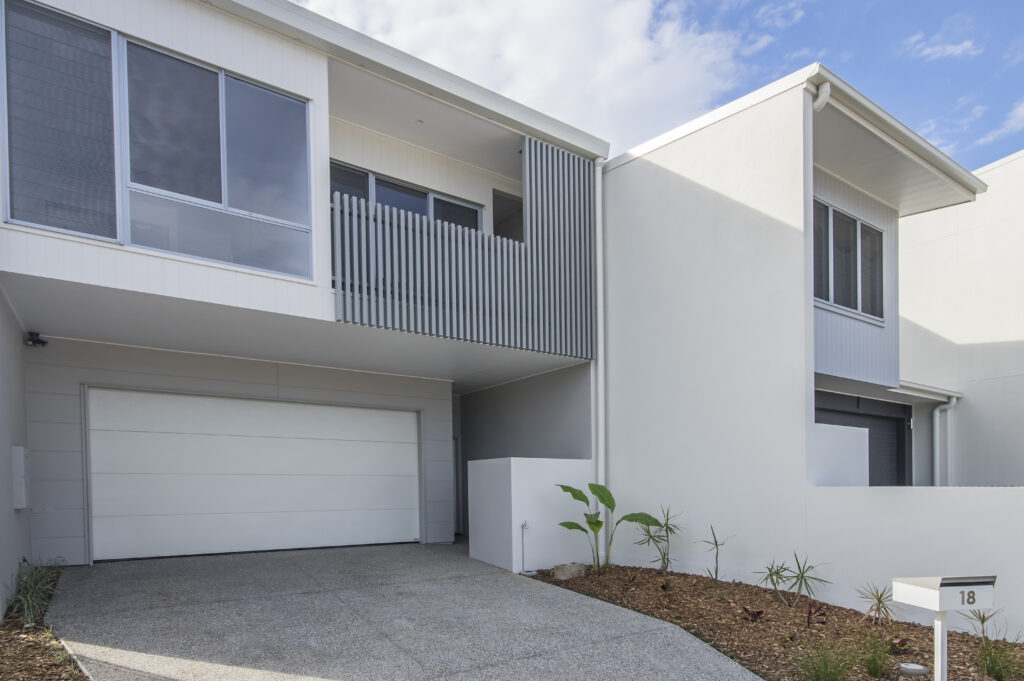
Townhouse developments can be a strong use of land, particularly in areas where demand exists for well-designed, low-maintenance housing close to services, transport and lifestyle amenities.
However, a successful townhouse development requires more than simply fitting multiple dwellings onto a block. Developers need to consider site conditions, planning requirements, construction costs, buildability, design coordination and the long-term value of the finished project.
Here are some key things to consider before starting a townhouse development.
- Site Suitability
The first step is understanding whether the site is suitable for the type of development being considered.
Site size, frontage, slope, access, services, drainage, overlays, neighbouring properties and council requirements can all affect what is possible.
A site may look suitable at first, but early investigation can help identify constraints that may affect design, approvals, cost and construction.
- Planning and Approval Requirements
Townhouse developments often require careful planning before construction can begin.
Depending on the site and project scope, this may involve town planning, design documentation, engineering, council approvals, service connections and other consultant input.
Understanding these requirements early helps reduce surprises later in the process and gives developers a clearer view of what needs to happen before the project can move forward.
- Buildability
A design may work on paper, but it also needs to be practical to build.
Buildability considers how the project will actually be constructed, including access, staging, structural requirements, materials, services, site constraints and trade coordination.
Early builder input can help identify issues before they become expensive or difficult to resolve during construction.
- Budget and Cost Planning
Townhouse developments need careful cost planning from the beginning.
Construction costs can be affected by site conditions, design complexity, finishes, engineering, access, retaining, services, approvals and market conditions.
Having realistic budget expectations early allows developers to make better decisions and assess whether the project remains commercially viable.
- Design and Market Appeal
A successful townhouse development should balance efficient land use with a design that appeals to the target market.
Layout, parking, storage, outdoor areas, privacy, natural light, finishes and street presentation all influence how the finished development is received by buyers or tenants.
Good design decisions can help improve both liveability and long-term value.
- Timing and Project Coordination
Townhouse projects involve many moving parts, from consultants and approvals through to procurement, construction and handover.
Clear communication, documentation and coordination are important to keeping the project moving and reducing unnecessary delays.
Working with an organised builder can help ensure trades, suppliers and construction stages are properly managed.
- Choosing the Right Builder
Choosing the right builder is an important decision for any townhouse or multi-residential development.
Developers should look for a builder who understands construction management, cost control, buildability, communication and the importance of delivering a quality outcome.
Quality First Constructions works with developers and clients on multi-residential projects across the Sunshine Coast, Noosa and selected Moreton Bay locations, with a focus on practical planning, clear communication and reliable project delivery.
Planning a townhouse or multi-residential project? Complete our Initial Project Brief so our team can understand your project and determine the most suitable next step.